Essay
Reading the tie-up before anyone has scored
The first honest information in a wrestling match is not the scoreboard. It is what the hands do when they finally meet.
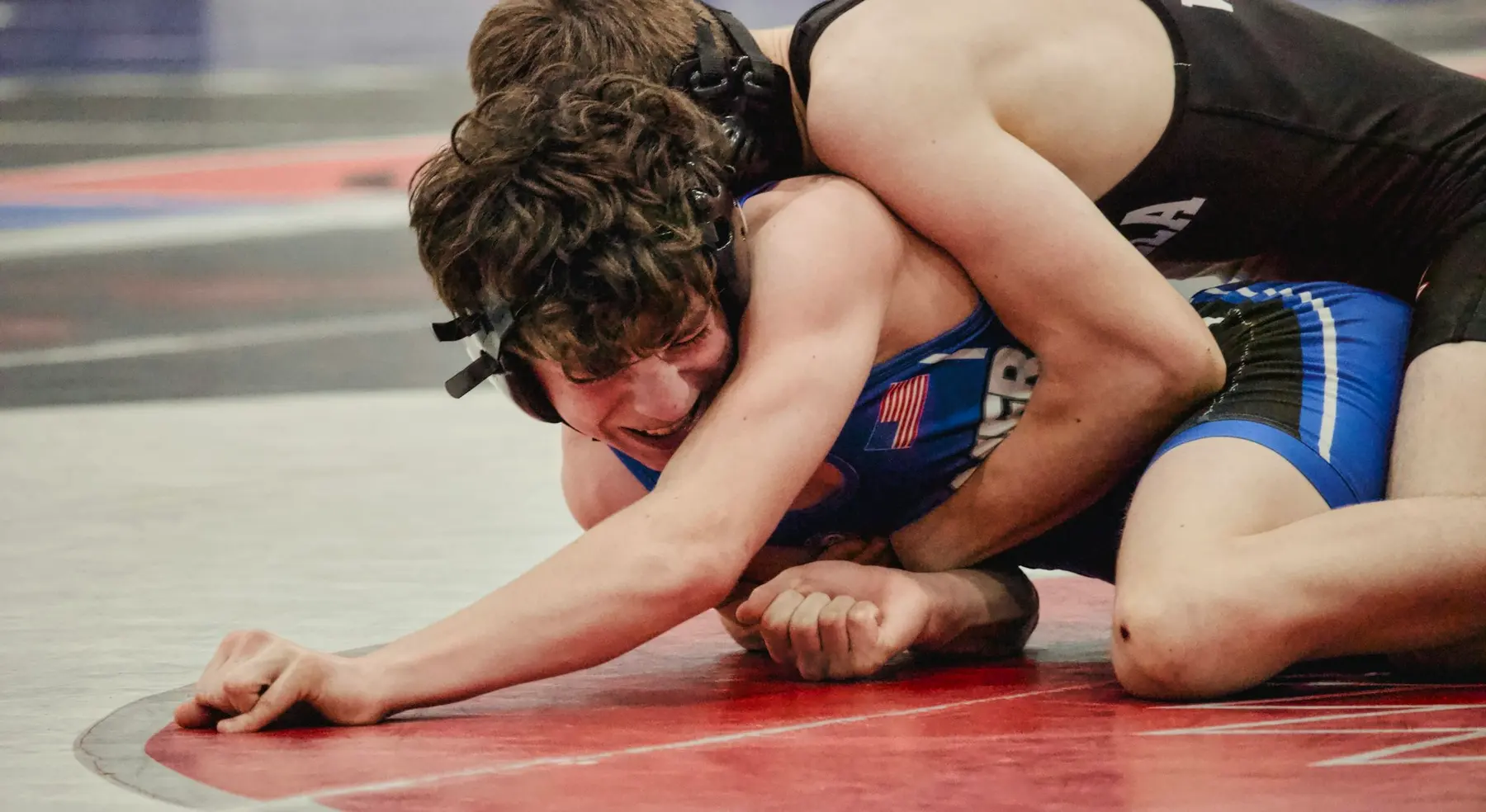
A wrestling match begins twice. The referee blows the whistle. Then, a little later, the athletes agree to touch. Everything before that contact is posture. The tie-up is where posture has to become a grip, and where a viewer who does not know the rulebook can already tell who would rather be there.
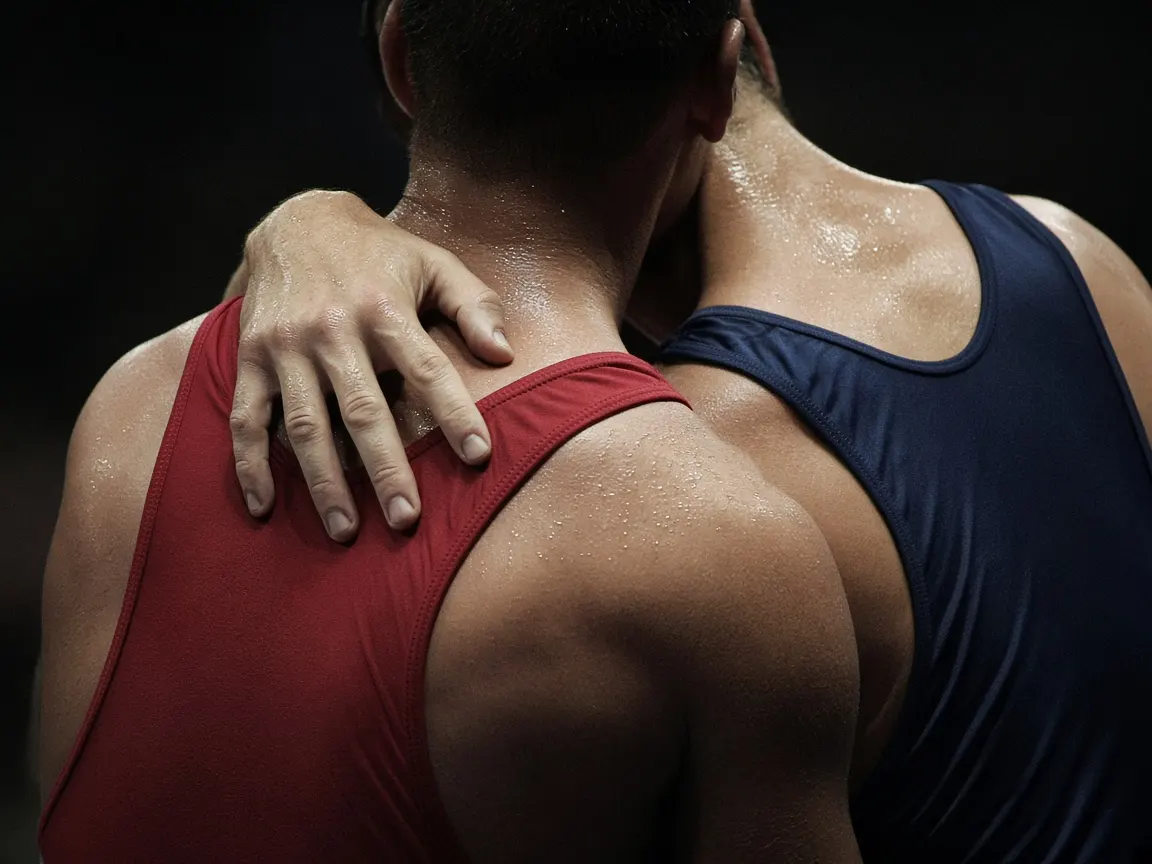
Watch the forehead and the hands. Skip the feet for a minute. A wrestler who wants a low attack will often take an inside tie only so they can throw it away. A wrestler who wants to throw will keep the head heavy and the wrist alive. Neither choice is virtuous. They are declarations. The rest of the bout is an argument about whether the declaration was true.
Three rooms, one opening problem
Folkstyle, freestyle and Greco-Roman pay for different endings. They share the opening. Two athletes, a small circle, and the refusal to give the other a free entry. In a college gym the headgear and the riding rules change the price of a stalemate. On a senior freestyle mat the price changes again, because a throw to the back is worth more than a long ride. In Greco-Roman there is no shot to the leg. The hands are the whole sport. The comparison is worth reading once. After that you can see it.
You can miss the score and still understand the match, if you saw who wanted the grip.
This is the case for watching without the graphic. The scoreboard is a summary written by a committee of sensors and a human being with a better angle than yours. The tie-up is the sentence the athletes are saying. At the worlds in Astana, the bouts that matter will announce themselves in the first twenty seconds. A point is not required to prove it.
None of this requires a technical education. It requires the attention a photograph already assumes. Stay with the hands. If they are calm, believe the calm only until the level changes. If they are frantic, someone is about to be thrown, or about to pretend to throw so they can do something smaller and meaner.
The film desk keeps a longer version of this habit on the tie-up study. Wrestling is unusually kind to stills. The grip holds. You can do the work without a replay button.
There is a practical use for coaches and a smaller one for the rest of us. If you are teaching a beginner, do not start with a finish. Start with the moment they touch. Who is comfortable. Who is already looking for the exit. The beginner's guide says the same thing in plainer clothes. The tie-up is not advanced. It is the sport, before the sport has agreed to keep score.
A minute you can practise in the stands
Pick a bout you do not care about. That helps. Caring makes you watch the scoreboard. For sixty seconds, name only the hands. Inside tie. Collar. Wrist. Nothing. If you cannot name it, you are watching the story you brought with you, which is fine for a preview and useless once the whistle has gone.
Then do the hips for the next sixty. A hip that drops is a shot, or the sale of a shot. A hip that stays high in Greco is a person looking for the underhook, not a person who forgot the sport has legs. The legs are still there. The rules have asked everyone to pretend the attack does not start there. The pretence is the style.
After two minutes you will have missed a point. Good. The point will be on the graphic when you look up. What you will have instead is a reason the point happened, which is the only thing a replay cannot give you if you did not see the grip that paid for it. Astana will offer this exercise all day. Most people will spend it arguing about a seeding.