Long read
What a country repeats on a Tuesday
National style is not a flag. It is the drill that survives the coach who invented it.
People talk about national style as if it were weather. Iran throws. Japan chains. Cuba locks. The Caucasus does something with the hips that the sentence cannot finish. Some of that is true for a decade and then it is a postcard. The thing that lasts is more boring. It is the drill a room refuses to drop when a new coach arrives with a new religion.
You can watch it without a passport. Count how many times in a bout an athlete returns to the same grip. If they return to it after it fails, someone spent years telling them the failure was information, not a verdict. If they abandon it for a scramble they do not have a map for, the room they came from either loves chaos or ran out of time.
Japan, as a habit
Yui Susaki at 50 kilograms was, for a stretch, what a habit looks like when it becomes a winning streak people get superstitious about. Low, fast, a finish that seemed to start before the other athlete had chosen a defence. She lost early in Paris to Vinesh Phogat. The loss does not delete the habit. It tells you a habit can be solved by someone who has watched it enough times to be bored by it. Boredom is a scouting method.
Cuba's Greco-Roman habit is older than any one heavyweight, even the one with five Olympic golds. Underhooks. Patience. A lift that does not rush the lock. American folkstyle's habit is pace and a shot that expects contact. None of these sentences should be used as a prediction. They are useful as a first look, the way a city's architecture is useful before you know the neighbourhoods.
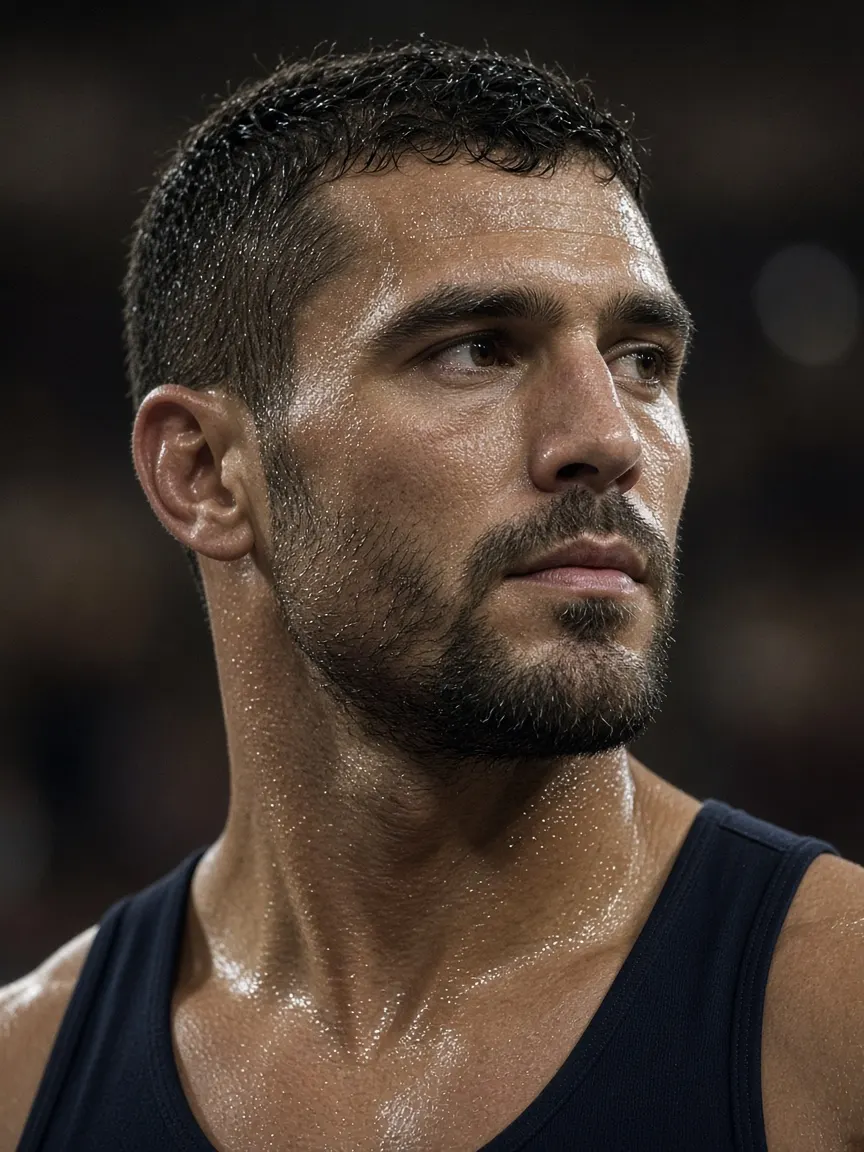
The athlete in the photograph at the top of this piece is not a national example. He is unidentified on purpose. Style lives in rooms, and rooms are full of people who will never have a profile on a website. If the Tuesday drill is right, one of them will make a final look inevitable, and a writer will call it culture. It was Tuesday.
When the postcard expires
A national habit expires in a specific way. The athletes keep the stance for a year after the results stop coming, because the stance is what the room praises. Then a younger wrestler, annoyed at losing to a style the postcard did not mention, changes the Tuesday drill. The change looks like disrespect. It is usually research. Someone watched the loss enough times to be bored, and boredom is where new entries come from.
Iran, the United States, Japan, Cuba, Turkey, the Caucasus schools. Any of those names can be a shortcut or a door. The shortcut is a sentence in a preview. The door is a bout in which you can see the drill surviving contact. If you cannot see it, do not write the country's name as if it were an explanation. Write the grip. The grip is checkable. The myth is not.
This magazine will keep using countries, because wrestlers compete under flags and the flags organise the brackets. We will try not to use them as personalities. A country does not shoot a low single. A person does, on a Tuesday, in a room that decided the low single was worth the hour.