Above the waist
Greco-Roman
No leg attacks. A sport of locks, lifts and the ordered mat wrestling that follows a stall.
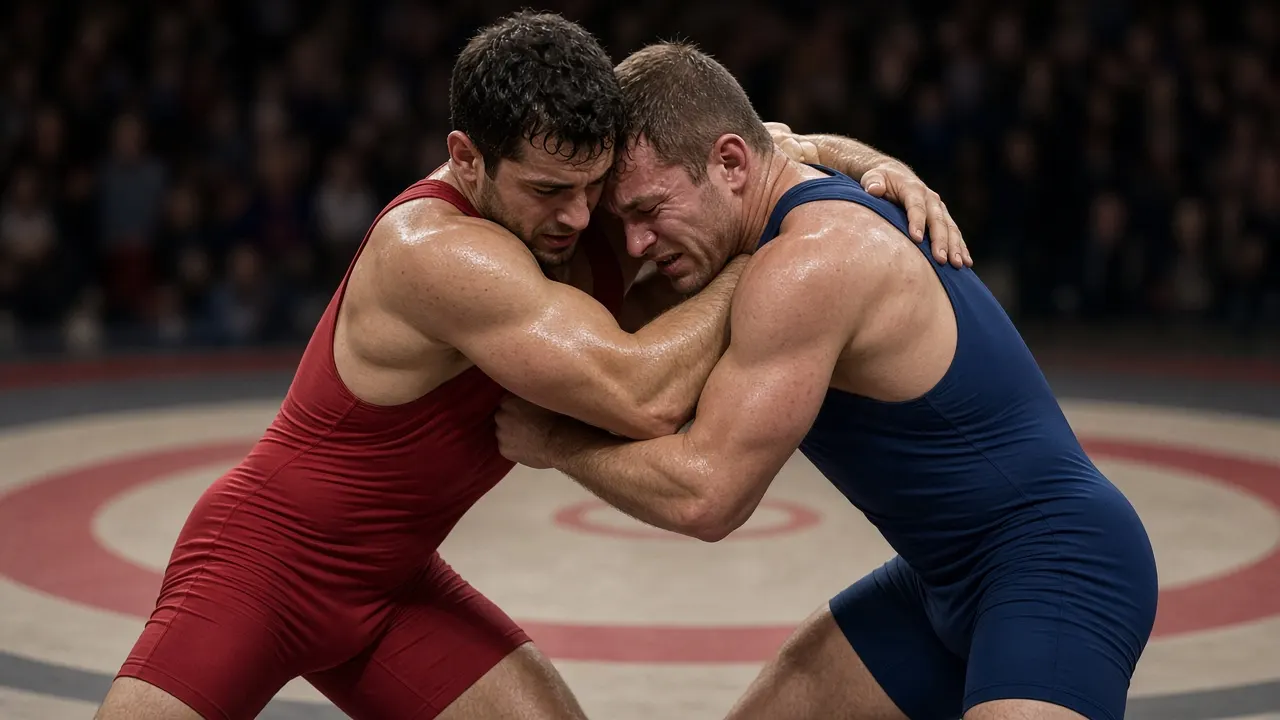
Greco-Roman forbids attacks below the waist. The sentence is short and the sport it creates is not. Without a shot to the ankle, posture changes. Heads get heavier. Hands hunt underhooks and body locks, because a lock is the doorway to a lift, and a lift is the doorway to a score large enough to settle a final.
When neither athlete will open, the referee can judge passivity and order par terre: one wrestler on the mat, the other behind, with a short chance to turn or throw. Viewers who call Greco slow are often waiting for an attack the rules have removed. The action is in the grip.
Olympic Greco-Roman weights are 60, 67, 77, 87, 97 and 130 kilograms. The heaviest class spent years in the shadow of one career — five Olympic golds for Mijaín López — and is now, after his retirement, a division that has to justify itself without him.
You do not need a classical education to watch it. You need to believe that two athletes can settle a fight without ever reaching for a leg. The mat, repeatedly, says they can.