Profile
The standard Saori Yoshida left on the mat
Three Olympic golds, a silver she did not apologise for, and a run of world titles that still organises the memory of the lighter weights.
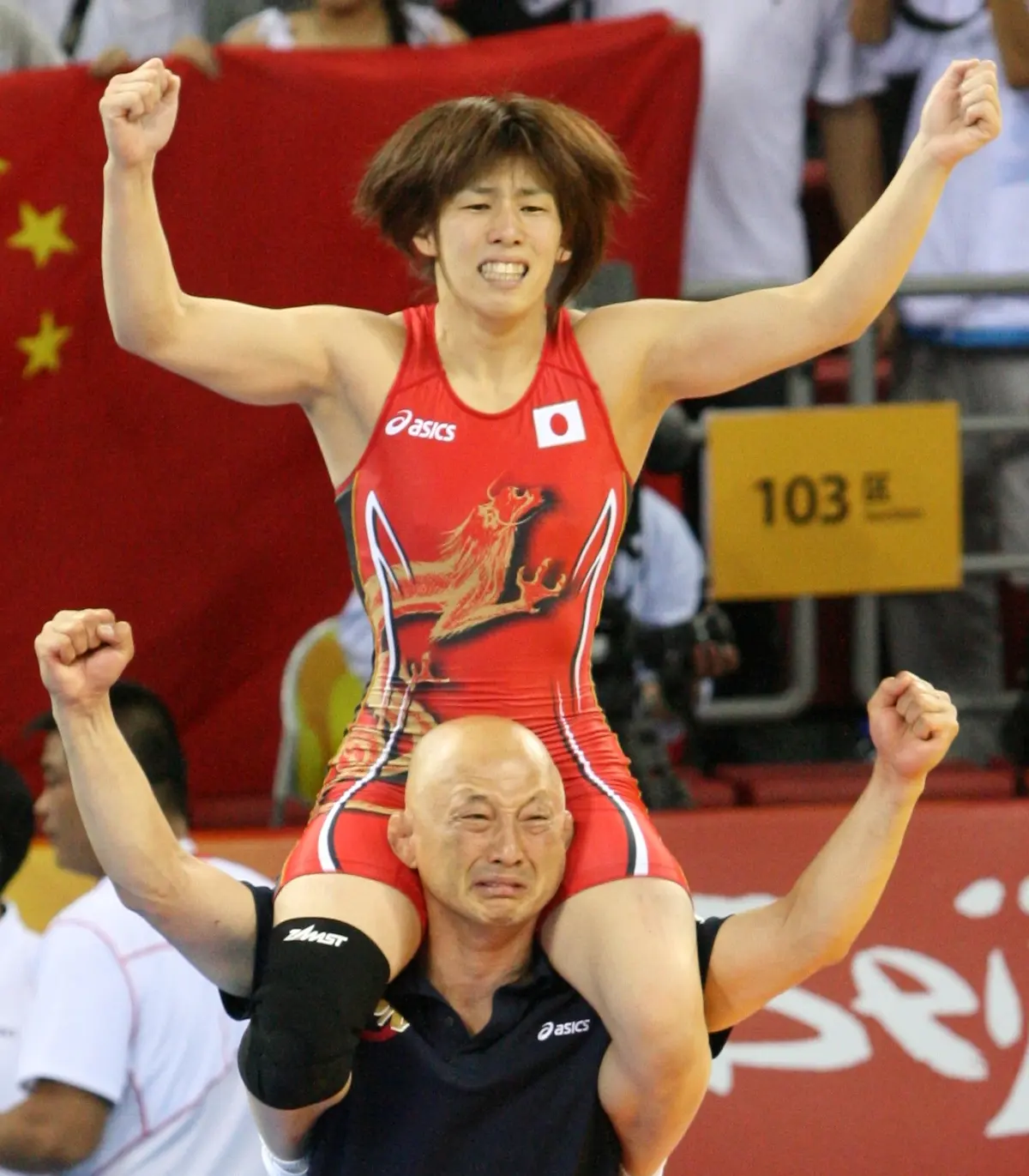
Saori Yoshida did not simply win women's wrestling for a stretch of years. She made the lighter finals feel like appointments. Olympic gold in Athens, Beijing and London. Silver in Rio. Thirteen world titles. The numbers are so round they start to sound like a plaque. The matches were more particular than a plaque can stand.
She controlled tempo. She could pull an opponent's best attack forward, into the first minute, and then wrestle downhill. Japanese women's wrestling already had a system. Yoshida was the face that made the system visible to people who do not follow systems. When she retired in 2019, the divisions she had lived in did not become open so much as newly describable. Other athletes could be written about without the first clause being 'not her'.
The silver belongs in the picture
A record like that flattens the people who lost to her, some of whom were the best in the world on any other day. It also sets a rude standard. Consistency across rule tweaks, weight tweaks, and a home Olympics that did not end in gold. The silver in Rio is part of the stature. Helen Maroulis won that final. A career made only of gold is a poster. A career that includes the loss, in public, at the Games, is a body of work.
The inheritance is not the count. It is the idea that a final is a place you can live, not visit.
Women's wrestling in Astana will not be a sequel. The athletes at 50, 53 and 57 are building their own appointments. Yoshida remains the cleanest way to explain, to a reader who has never sat through a full session, what the top of this sport looked like when one person held it. The profile keeps the line of medals. This essay is about the tempo, which does not fit in a list.
There is a Japanese story and a wrestling story, and they are the same story if you stay with the matches. Drills. A low stance. The refusal to let a bout become a scramble on someone else's terms. You can see pieces of that in athletes who never met her. Influence in this sport is rarely a quote. It is a habit that survived the person who made it look inevitable.
What the numbers flatten
Thirteen world titles is a figure that stops people thinking. It should start them. Each one of those titles was a bracket full of athletes who had spent the year trying to be the exception. Most of them were not. A few were close enough that the final looked, for a minute, like a different sport. The minute is the part the number deletes. Yoshida's standard was not that she was never troubled. It was that trouble did not change the shape of her wrestling for long.
The Rio final is the trouble that lasted. Maroulis had an answer, and the answer held for six minutes. Treating that as the collapse of a standard is how highlight culture thinks. A standard that can be beaten in public and still organise the next decade of lighter-weight wrestling was never fragile. It was specific. Low. Early. Unwilling to wrestle the other person's scramble.
If you watch 53 or 55 kilograms now and you catch yourself waiting for a ghost, stop. The athletes in the circle are not auditioning to be her. They are wrestling a bracket that exists because she made the weight matter to people who do not otherwise watch. That is a large inheritance. It does not require them to bow.